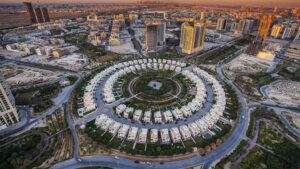
The Dubai skyline is a global testament to rapid urban expansion and economic foresight. For international investors in 2026, the market has transitioned from the post-pandemic surges of previous years into a mature, stable environment characterized by moderate, sustainable growth. Buying property in Dubai as a foreigner is now more regulated and transparent than ever, offering a secure alternative to more volatile traditional markets.
Whether your goal is a secondary residence or a high-yield asset, understanding the current landscape is vital. Many prospective buyers ask: Can foreigners buy property in Dubai? The answer is yes. Since the landmark 2002 decree, international buyers can achieve 100% ownership in designated freehold zones. This guide provides essential 2026 data on regulations, costs, and strategic entry points to invest in Dubai real estate Developers successfully.
Why Invest in Dubai Real Estate?
In 2026, Dubai remains a premier destination for global capital due to its high rental yields and tax-neutral status. While major cities like London or New York often struggle to provide 3% net returns, Dubai’s market continues to offer gross yields between 6% and 9%, depending on the community.
- Tax Efficiency: The UAE maintains a 0% tax policy on personal rental income and capital gains for individual investors.
- Safety & Infrastructure: Consistently ranked among the top five safest cities globally, Dubai’s infrastructure—including the newly operational segments of the Dubai Metro—underpins long-term property value.
- Golden Visa Integration: Foreigners can secure long-term residency through property, with the 10-year Golden Visa remaining a significant draw for high-net-worth individuals.
The market is strictly overseen by the Dubai Land Department, ensuring that every Dubai real estate investment is recorded in a centralized, secure digital ledger.
Can Foreigners Buy Property in Dubai?
Foreigners can legally buy freehold property in designated areas without UAE citizenship. These zones cover the majority of “New Dubai,” including the most popular residential and commercial hubs.
Freehold vs. Leasehold
It is essential to identify the ownership structure before signing a Sales and Purchase Agreement (SPA):
- Dubai Freehold Property: Provides absolute ownership of the structure and the land. There is no expiry date on the title deed, and it can be inherited by heirs.
- Leasehold Property: Grants rights to the property for a fixed period, typically 99 years. The land remains owned by a third party (the freeholder).
For those foreigners buying property in Dubai, freehold is almost always the preferred route for capital appreciation and ease of resale.
Best Areas for Foreign Investors (2026 Data)
Location remains the primary driver of ROI. In 2026, the market shows a distinct split between “Prime” luxury hubs and “Value” emerging communities.
| Area | Type | Avg. ROI | Approx. Entry Price (AED) | Best For |
| Dubai Marina | Apartment | 7.2% | 1.6M (~$435k) | High Liquidity |
| Downtown Dubai | Luxury | 5.8% | 2.6M (~$708k) | Prestigious Address |
| Jumeirah Village Circle | Mid-market | 8.8% | 900k (~$245k) | Maximum Yield |
| Palm Jumeirah | Ultra-Luxury | 4.2% | 12M+ (~$3.2M+) | Capital Growth |
| Dubai South | Emerging | 7.9% | 750k (~$204k) | Future Proximity |
Legal Process & Documentation
The Dubai property laws for expats are enforced by the Real Estate Regulatory Agency (RERA). The process is typically completed within 30 days for cash buyers.
The 4-Step Purchase Process
- Agreement (Form F): The buyer and seller sign “Contract F,” a RERA-standardized document. A 10% security deposit is typically held by a licensed broker.
- Developer NOC: The developer issues a “No Objection Certificate” once they confirm all service charges are paid. This fee usually ranges from AED 1,000 to AED 5,000.
- Trustee Office Appointment: Both parties meet at a DLD-licensed Registration Trustee office.
- Transfer: The DLD processes the payment and issues a new digital Title Deed instantly.
Property Costs & Fees (2026 Estimates)
One of the biggest mistakes investors make is failing to budget for closing costs. Generally, you should budget for 7% to 8% on top of the purchase price.
- DLD Transfer Fee: 4% of the property value. (While legally shared, the buyer almost always pays the full 4% in the secondary market).
- Trustee Registration: AED 4,200 (for properties over AED 500k).
- Admin Fees: Approximately AED 580 for Title Deed and Map issuance.
- Agency Commission: Typically 2% of the sale price (+ 5% VAT). ++
Note for Mortgage Buyers: You must pay a 0.25% Mortgage Registration Fee to the DLD. As of 2026, non-resident buyers typically require a minimum 20-25% down payment.
ROI & Rental Income Strategy
In 2026, “Short-Term” leasing (Holiday Homes) in areas like Business Bay yields roughly 15-20% higher than annual contracts, though management fees are higher. Always account for Service Charges, which are annual fees paid to the developer for building maintenance. These are calculated per square foot and can significantly impact your net ROI.
Comparison of Ownership Rights
| Feature | Foreign Buyer | UAE/GCC Citizen |
| Freehold Areas | Yes (100% Ownership) | Yes |
| Leasehold Areas | Yes | Yes |
| Non-Designated Areas | No | Yes |
| Golden Visa | Eligible (AED 2M+) | N/A |
Risks & Mistakes to Avoid
- Overlooking Service Charges: High-end towers often have higher maintenance costs. Verify these via the Dubai REST App before committing.
- Off-Plan Delays: While off-plan offers flexible payment plans, only invest with reputable developers. Ensure your funds are paid into a RERA-registered Escrow account.
- Currency Stability: The AED is pegged to the USD ($1 = 3.67 AED), providing a natural hedge for dollar-based investors against local inflation.
FAQ’s
Q1: Do foreigners need residency to buy property in Dubai?
No. You can buy property while on a tourist visa or remotely via a notarized Power of Attorney (POA).
Q2: What is the minimum investment for property in Dubai?
Entry-level studios in communities like International City or Arjan can start around AED 500,000 (~$136,000).
Q3: Is Dubai property tax-free?
Yes. There is no annual property tax, no income tax on rent, and no capital gains tax for individual owners.
Q4: Can I get a visa by buying property?
Yes. As of 2026, a completed property worth AED 750,000 qualifies you for a 2-year Investor Visa. A property (ready or off-plan) worth AED 2 million (~$545,000) qualifies you for the 10-year Golden Visa.
Q5: How to invest in Dubai real estate as a foreigner?
Identify your financial goal, select a RERA-licensed agent, and ensure you have the 4% DLD fee liquid, as it must be paid at the time of transfer.
Q6: What are the risks of buying property in Dubai for foreigners?
The primary risks include market cycle fluctuations and potential delays in off-plan handovers. Stick to “Tier 1” developers to mitigate construction risk.
Q7: Is it wise to invest in property in Dubai?
With the city’s population growth outpacing supply in the villa and luxury segments, it remains a strong “hard asset” for diversification.
Q8: Can a foreigner own a property in Dubai?
Yes, in all designated freehold zones, you hold the same legal rights as a local owner, including the right to sell or lease.